A recent peregrination, with an accomplice.
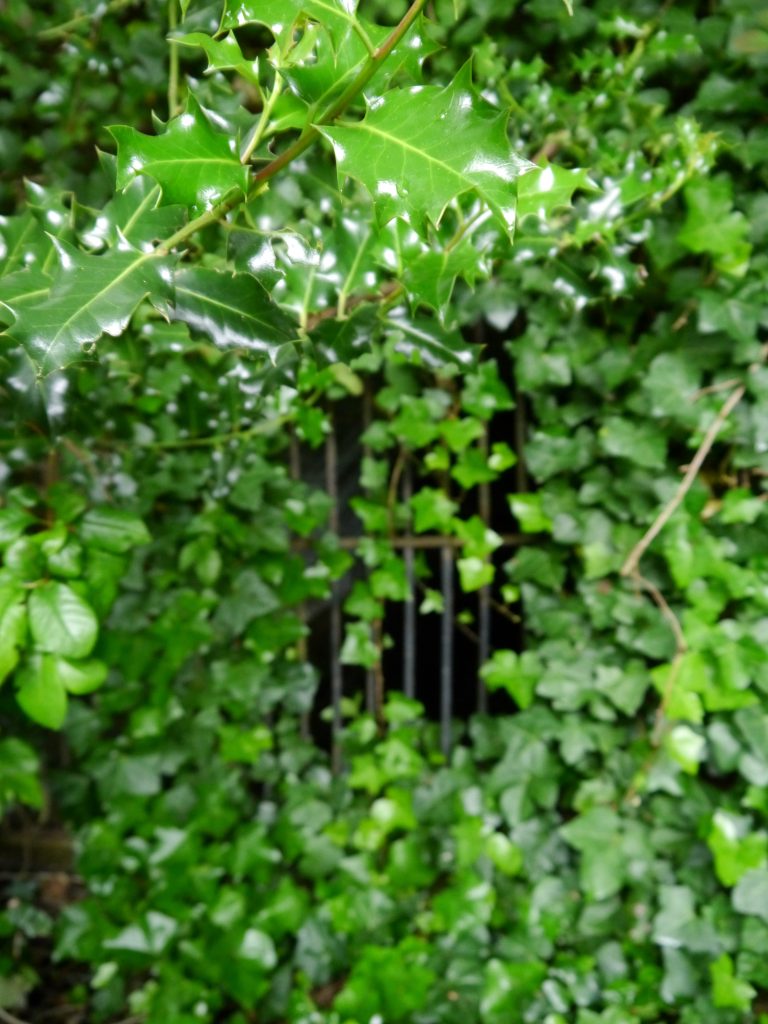
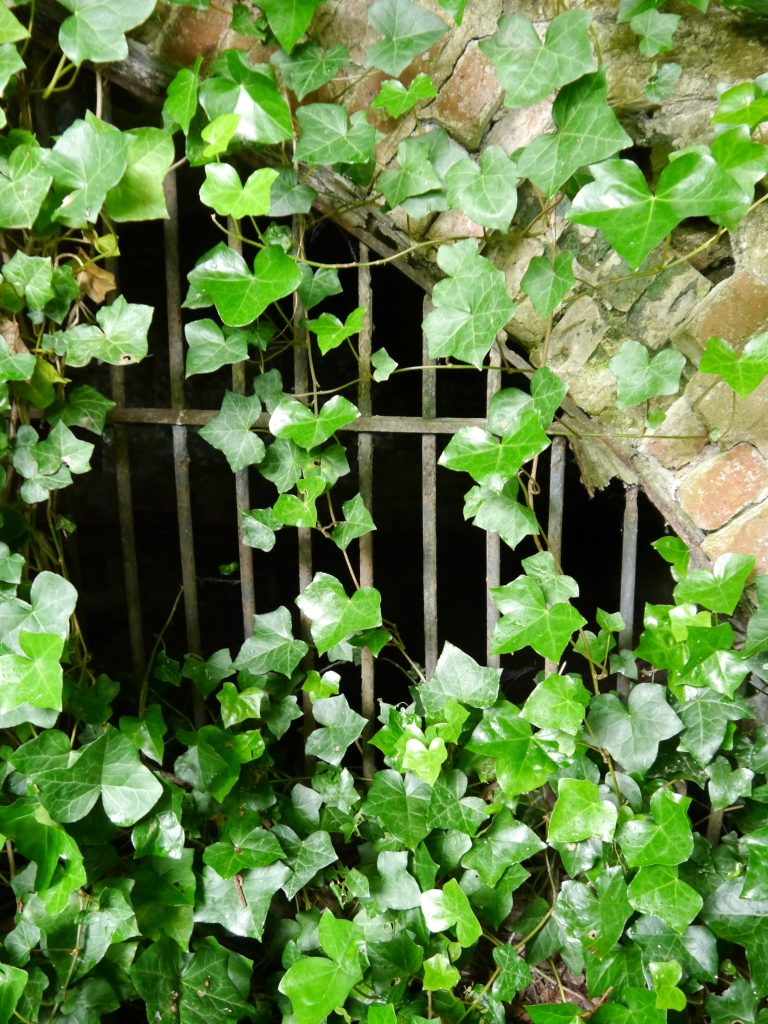
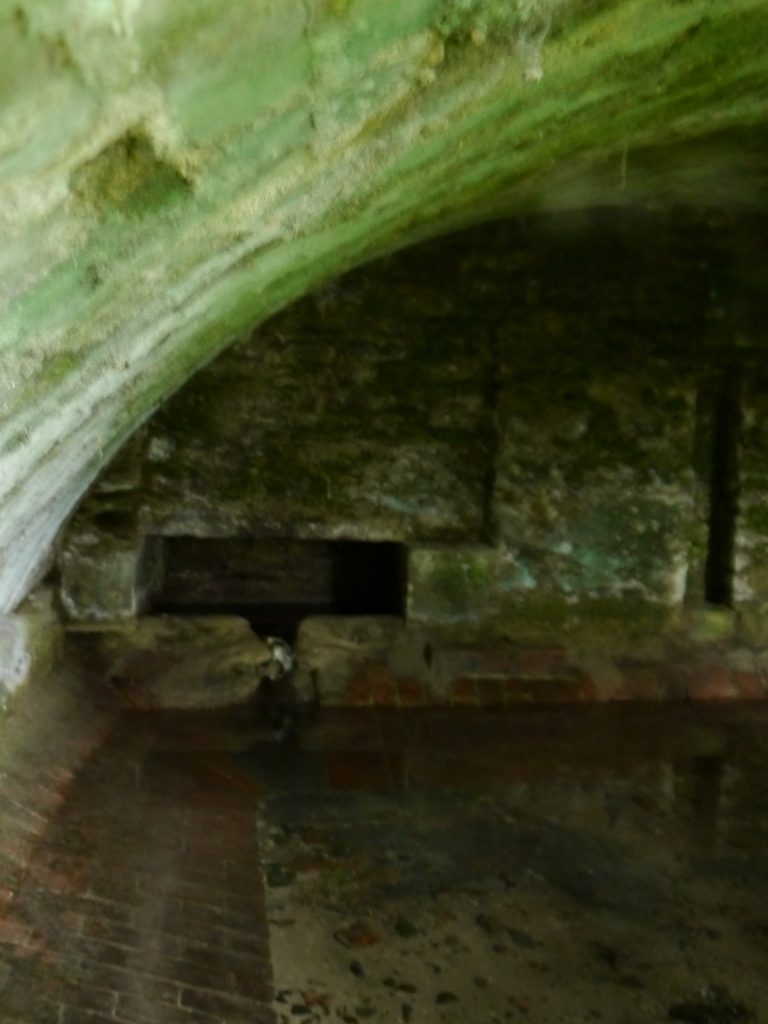
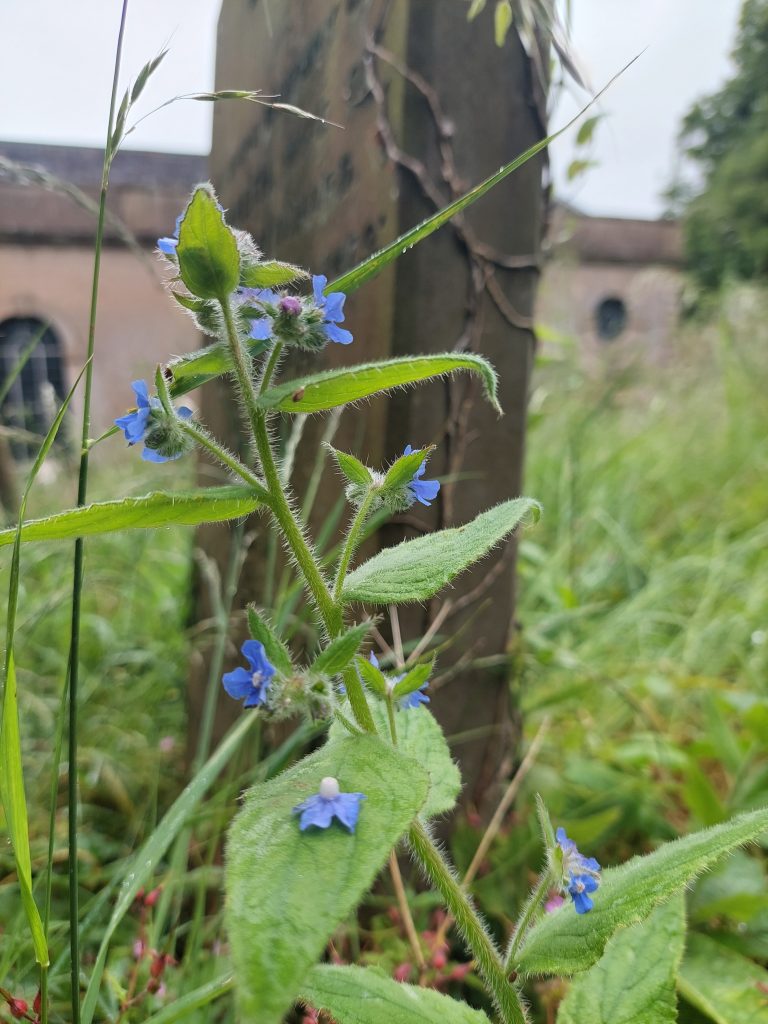
St. Edith’s Well, so hidden by foliage and time that it took us half an hour to find, a rusty wrought iron grille barring entrance to the forbidden pool. The Wergin’s Stone, alone in a distant field, all but invisible from the road, caged in shiny angular metal. A derelict church, the graveyard overgrown with a profusion of wild flowers, a giant yew tree presiding over the grounds, a faded ‘Keep Out’ sign standing watch.
Half-forgotten places, hidden away and neglected. I’m saddened by their disuse and decline, frustrated by the distance imposed by barriers. But determined to seek them out and, when found, quietly awed by their very being.
These places speak to me. I feel that my attention is appreciated as we sit and commune. St. Edith’s Well, in particular, felt like an elderly woman, content in her solitude, but delighted that someone had stopped by to say hello.
On the return home: St. Ethelbert’s Well, a church built up around it, now absorbed into an extended vestry, disguised as a piece of furniture.
Outside, the churchwarden lamented the erosion of inscriptions on gravestones carved from the soft local stone. A line from a novel popped into my head: “Perhaps, after all,” wrote Kate Atkinson, “one’s purpose in the world was to be forgotten, not remembered.” I nearly shared it out loud but the feelings evoked by this day and that quote had barely begun to coalesce.
How many times have I bumped up against this? An understanding that open access to Stonehenge has to be managed, but railing against the barriers; disappointed that I cannot step into the pool at St. Edith’s Well; frustrated that we cannot reach The Wergin’s Stone; saddened by all the springs and wells that have been diverted or closed off.
Yet nothing is forever.
I have a beautiful green leather jacket in my wardrobe, bought for me by my late mum, with a whole story attached. By not wearing it, I maybe hope to preserve the memory, but perhaps the memory would better be honoured by use.
So it seems there’s something for me in using these things, visiting these places. The relationship is reciprocal somehow, and yet bittersweet. The spring will dry up, the stone will crumble, the jacket will wear out. In a way, though, the relationship feels heightened by this knowledge.
Somewhere between remembrance and forgetting, we can meet, we can witness each other, me and these stones, these wells. Something is alive here, but it won’t always be, and just possibly, it shouldn’t.
There’s a certain dignity to be found when I approach these places as living, breathing – and yes, expiring – entities. Half-forgotten is only half-true, because we are here, and others come here too.
Attention matters, without a need to preserve, to save. Just companionship on this journey, and a mutual respect.


Leave a Reply