My fascination with springs and holy wells may be fairly recent, but my relationship with water sources is much older.
One of my earliest memories, in fact, from about four years old: me and my brother amusing ourselves by racing raindrops down the clear polythene of our parents’ makeshift camp in the middle of a thunderstorm.
Once housed, we had to share bath water twice a week, but we also swam in rivers, splashed in puddles, and took trips to the beaches of Wales and North Cornwall. I can still remember the gritty sandwiches and the taste of salt on my lips, shivering with a towel around my shoulders on the beach.
As I came into adulthood, living on the road as a ‘new age’ traveller, sourcing water became part of the weekly routine. I loved the fact that basic necessities such as this required some effort, but it was still a chore at times. If I was travelling with others, there would usually be a joint ‘water run’, where we would all load our empty containers – an assortment of plastic butts and metal milk churns – into one vehicle and go fill up from a tap at the nearest service station or churchyard.
Sometimes we were refused water. This was the 1990s and the media’s frenzy about the “threat” of travellers was occasionally reflected back to us from ordinary people. On the whole, though, my experience of Joe Public ranged from tolerance through to vicarious longing.
But as the 90s and its privatisation policies wore on, water became more tightly controlled and access became increasingly difficult. Gradually, the very stuff of life became enclosed. Another locked gate, another padlocked tap.
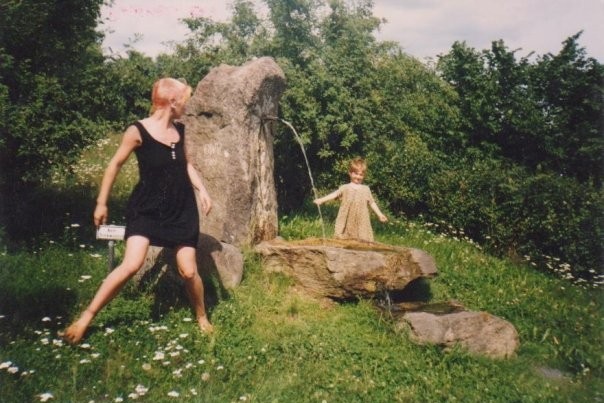
One of the few photographs I have on my wall is of me and my daughter at a spring in 1996. The spring is almost incidental – what I love is the slightly ethereal quality of the photo. But it reminds me that even then, we would seek out springs to fill our water butts where possible. I don’t remember it becoming a necessity, though; we usually found somewhere willing to let us use their tap.
In the early 2000s, I moved into bricks and mortar for a number of years. Metered water was just a fact of life – I didn’t give it too much thought.
So my fascination with springs in recent years has been part of a wider grounding in my life – a return to the source, if you like.
It really got started when I was seeing a guy who lived down in Cornwall and piped his water from a spring on his own land. But Cornwall is littered with springs and holy wells, and we began to explore them in earnest.
One of the springs we visited was Dupath Chapel Well, a place I’d encountered many years previously on a strange and magical solo mission.
On that earlier occasion, when I lived nearby, I had actually set out to find an earthworks, spotted on the OS map. My curiosity led me across a couple of fields when I spotted the farmer trudging up towards me. My first instinct was to turn and walk the other way, afraid that he would lecture me for being on his land.
Something in me rejected that response, and so I walked down towards him.
In fact, he seemed quite delighted when I told him I was looking for the earthworks. He not only told me where to find them, but also shared the nearby location of a large badger sett and gave me his blessing to visit at twilight to quietly observe them.
Heart warmed by his openness, and having walked the undulating earthworks, I headed back to the car.
It was then that I realised I was parked almost opposite the turning for Dupath Well Chapel – a sign I had passed literally hundreds of times. Of course, this was the day to find out what this even was.
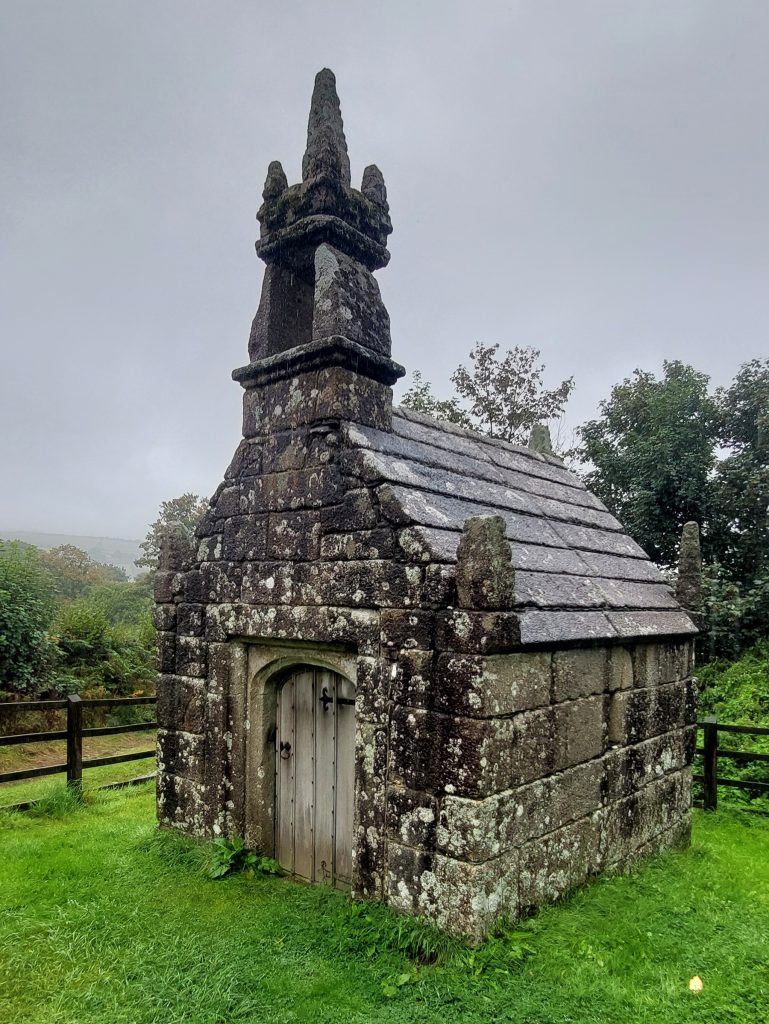
Initially, I found myself directed into a working farmyard. My uncertainty faded though, when I saw a signposted footpath leading to an incongruous, granite construction. Stocky and rectangular, it had a steep stone-tiled roof and a kind of sentinel-like spire rising above the open doorway.
The lichen-covered stone was evidently several hundred years old and the place had presence.
But it was when I stepped inside, sunlight streaming through the empty windows, that I was truly enchanted. The spring on which this chapel was built fed into a shallow stone trough across the back of the stone-paved floor. And that was it, just water in a trough in a stone room. But it was so much more: I felt like I’d entered some magical realm as I just stood, motionless, and absorbed the atmosphere.
Springs and holy wells nearly always have this kind of effect on me, and I wonder if the very earth, stone, and trees that surround them – not to mention the water itself – have somehow absorbed the veneration of all those who have visited over the centuries.
Dupath’s construction was not especially unique among the holy wells we visited that summer, many years later. Some were even more ornate and others were of a much simpler design, but each one built of the inscrutable granite hewn from the local landscape.
The one that really stuck with me, though, was St Keyne’s Well. We found it at a small shaded crossroads, tucked away with its back to the road. Like nearby St Cuby’s, it was housed in a small and simple stone shelter. But sadly the spring itself had been capped or diverted, and no longer fed the old well.
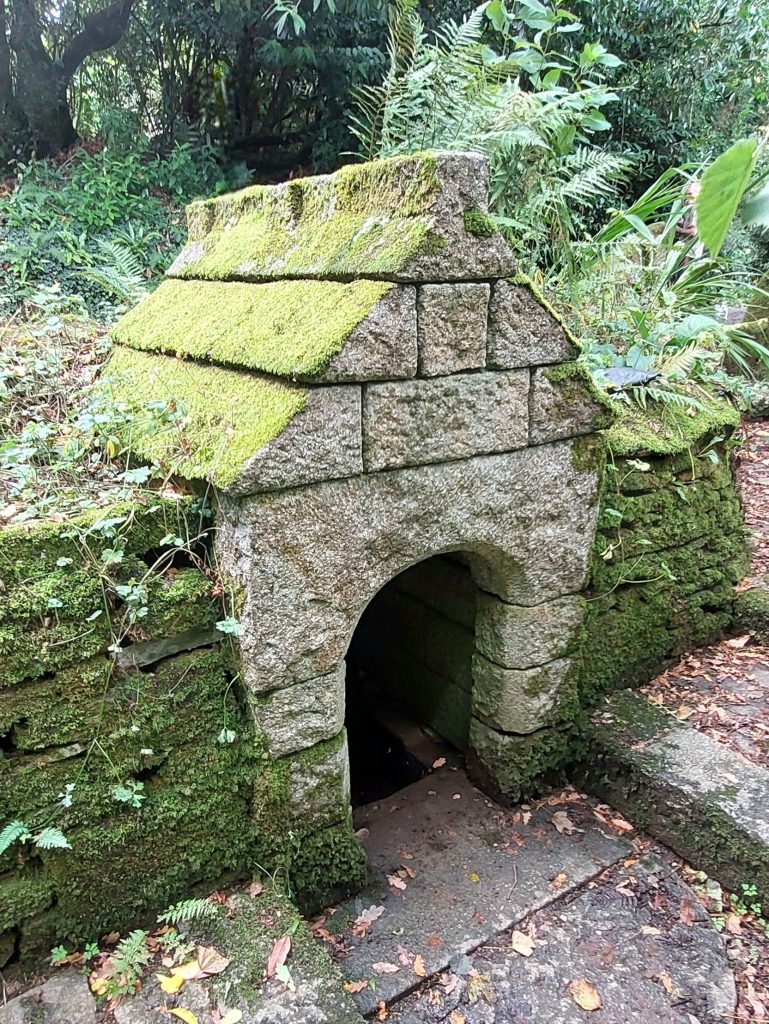
Nonetheless, the place retained its magic, surrounded by descendants of the four trees – oak, elm, ash, and willow – supposedly planted by St Keyne herself many centuries ago.
Charming as the site was, it was really the folklore that intrigued me here. The story goes that St Keyne, a Welsh princess, laid a spell on the spring – though why is unclear – such that if a husband or wife drink from the well, whoever drinks first will gain mastery in the marriage.
As I delved deeper into the history and folklore of these Cornish wells, I found many common motifs. The saints’ stories often read as morality tales, but I couldn’t shake the feeling that these were a later Christian overlay on what were, most probably, much older sacred sites. I don’t claim to have evidence of this; rather, it was a felt sense, alongside an awareness of early Christianity’s colonising tendencies.
That sense of ancient hallowedness is particularly strong for me at the well I now regularly visit for my drinking water, Saint Milburga’s in Shropshire.
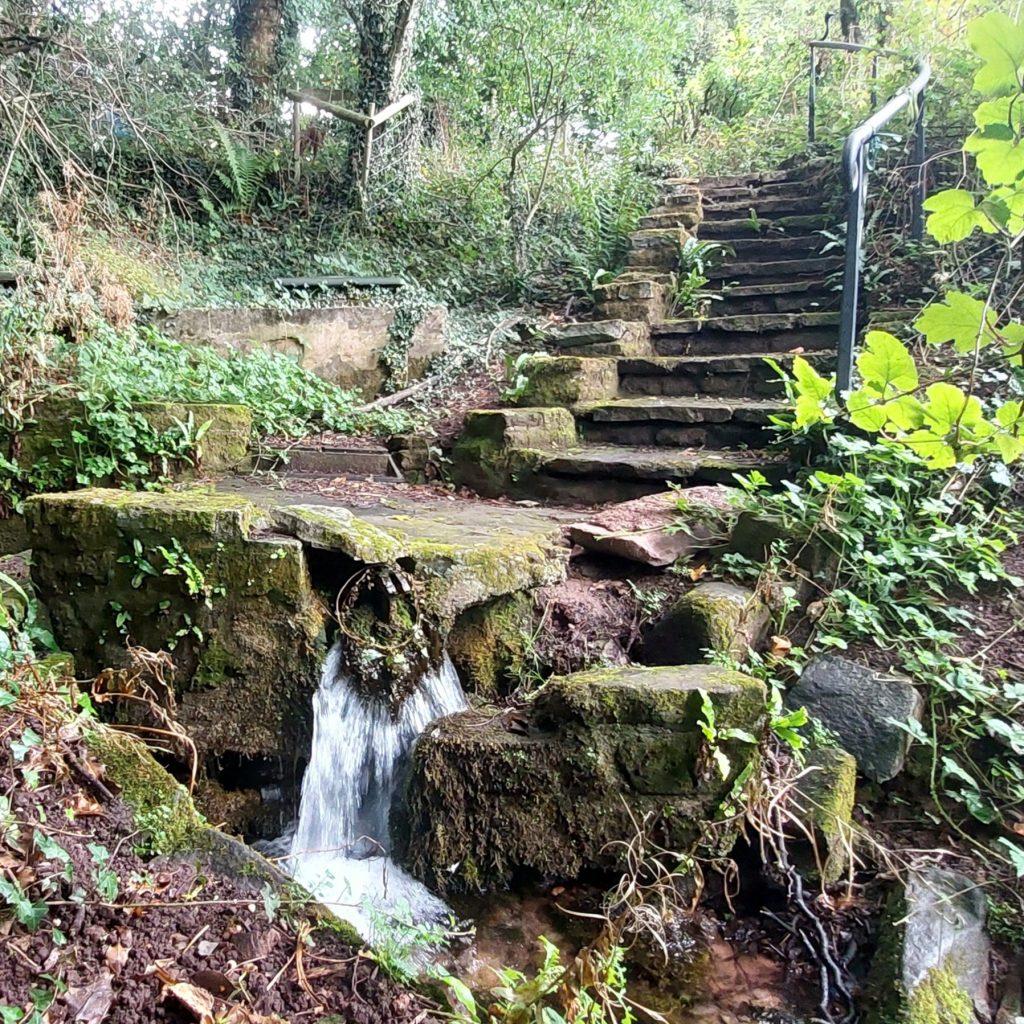
Located at the edge of a village, a fairly modern house sits right next to the site, which feels oddly jarring. But to step through the wooden gate and follow the gently curving stone steps down towards the well itself is to leave all sense of the modern world behind.
Ferns and wildflowers crowd the steps, green and vibrant. Native trees and shrubs, notably a Holly tree festooned with clouties, lean over the stone trough of the well. And then, emerging from a crumbling stone wall, a torrent of water spills out from a time-worn iron spout.
The water is crisp and clear and cold. While I have no idea as to its official ‘safety’, this water seems to resonate with my body in a way which not all springs do. When I cup my hands and drink from it, I can feel its clarity seeping through my body quite literally from top to toe.
And so this is the water with which I cook my food and quench my thirst, collected in butts every couple of weeks.


Leave a Reply